Hiển thị các bài đăng có nhãn Route. Hiển thị tất cả bài đăng

Thứ Năm, 25 tháng 6, 2015

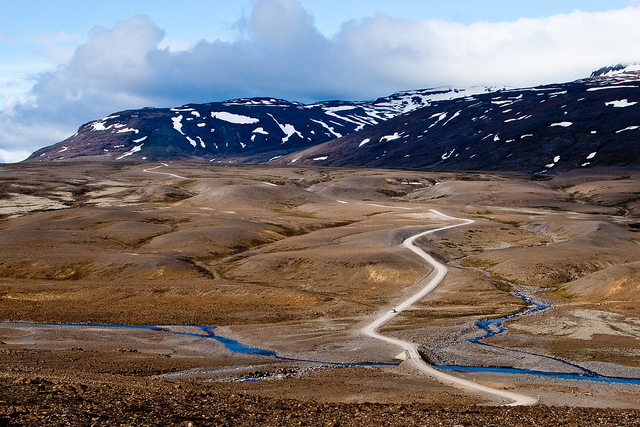
Kjölur highland route interior F35 in Iceland (Gullfoss to Varmahlíð - Blönduós)

Route F35 through the middle of Iceland, usually called the Kjölur route, is unique among Iceland’s Highland roads in being the only one you can traverse in an ordinary two-wheel drive car. Running between Gullfoss in the south and the Ringroad near Varmahlíð, at 200 km. long Kjölur is the shorter of the two inland routes across Iceland.


Of course two-wheel drive hire cars are not allowed on F-roads at all for insurance reasons; so that’s out of the question. And if you love and care for your own little Yaris, Avensis or Passat then it’s probably best to leave it at home. If, however, you are in someone else’s car, then have a blast!


Despite its convenient ‘unique selling point’ there is little doubt that you will be more comfortable and less prone to mishaps if you stick to a decent 4×4 vehicle along the Kjölur route. That way, things like mud and washboard gravel won’t be able to ruin your day.

As with all Highland roads in Iceland, Kjölur is only accessible in the summer, opening usually in late May or early June. You can check road conditions before you leave on the roads administration website. You should also study SafeTravel.is carefully. We also recommend you to read our article about driving in Iceland.


There are many reasons for visiting the Highlands; most of them involving the desire to ‘get away from it all’ (whatever all of it may be) and to see some of the only wilderness in Europe.


There really isn’t a lot up there – and that’s of course the biggest attraction!


The Kjölur route starts conveniently right by Gullfoss and winds its way up between the Langjökull and Hofsjökull glaciers and right past Hveravellir; a bubbling, glooping, churning geothermal area you’d be mad not to stop off at especially to take a refreshing dip in the hot spring. There is accommodation here if you want to stay the night, and plenty to explore on foot.


Before that, you will pass Lake Hvitarvatn and its surroundings. Langjokull glacier, Thorisjokull glacier, Eiriksjokull glacier, Hrutfell mountain, Hagavatn lake and Hvitarvatn lake.

Langjokull glacier

The glacier is roughly parallel to the direction of the country's active volcanic zone (see volcanism in Iceland): north-east to south-west. It is about 50 km long and 15 to 20 km wide, and has a slightly narrower point roughly between the lake Hvitarvatn on the Kjolur mountain road to the east and the Thristapajokull glacier to the west, near another smaller glacier, Eiriksjokull glacier, which is not quite connected to Langjokull glacier.


It is the nearest large glacier to Reykjavik. The area of the glacier includes some mountains, e.g. Jarlhettur ("The earl´s hat") on the east side of Langjokull glacier, a palagonitic mountain range, which originated in a fissure eruption under a glacier during Ice Age. The mountain Skridufell (1235 m) is situated on the east, above lake Hvitarvatn. Other mountains on the eastern side of Langjokull glacier are Fjallkirkja (1177 m), Thursaborg (1290 m) and Peturshorn (1370 m). A little to the east of Fjallkirkja is the hut of the Icelandic Glacier Research Society (Joklarannsóknarfelag), which includes scientists as well as interested amateurs.


Lake Hvitarvatn

Hvitarvatn (also known as Hvitarlon) is a lake in the Highlands of Iceland and the source of glacial river Hvita (e. White river), Hvitarvatn means 'White river lake'. It is located 45 km northeast of Gullfoss waterfall. It's surface is about 30 km² and it's greatest depth is 84 m. It is a magnificent experience to sail on the lake and the view is amazing.


Langjokull glacier is next to the lake and it goes all the way into the lake. The scenery is very beautiful. This is a place you have to visit. You can take a day tour and see the glacier and its magnificent surroundings.


You can also take a hike on the glacier and the view from there is fantastic.

http://www.glacierlake.is
Teléfono +354 8221006
e-mail info@glaciarlake.is


Hveravellir is a unique nature reserve situated on the Kjolur route in the middle of the west highlands between the glaciers Langjökull and Hofsjökull.


Hveravellir is one of the most beautiful geothermal areas in the world with smoking fumarolees and beautifully shaped with sky blue, boiling water. It is a special experience to have a look around, whether it is in the summer or winter.


As it continues north (assuming you choose to drive south to north…it’s not a one way street), the Kjölur route wends its way through the mini ‘lake district’ around the Blanda river and the Blöndulón reservoir before emerging onto the Route 1 highway (after a short drive along Route 731) in the town of Blönduós, North Iceland.


Blöndulón is one of Iceland’s biggest lakes and was created from scratch as recently as 1984 and not finished until 1991. It is a reservoir for a hydro electric power station and is fed by Blanda one of Iceland’s longest and biggest rivers and one of the best places to catch salmon in all of Iceland, which is already famous for its salmon. This remains true to this day, despite the fact that the dam has stopped salmon spawning as far upstream as they once did.


Anyway, this was not an article about salmon; it was about exploring the Icelandic Highlands. So get out there and do just that…but be careful!

Activities in Hveravellir: 

There are a number of other walking routes in the vicinity, for example to Rjupnafell, Thjofadalir, Jökulkrok and up to or on to the glacier Langjökull. Longer routes, for example to Hvitarvatn in the south as well as over the old route over Kjalhraun or along the borders of the glacier Langjökull, are also available. A fascinating route is also along the northern part of Langjökull and through Hallmundarhraun to Husafell. A further nice route leads around Hrutfell from where one can enjoy an extraordinary view over the area. There are an almost endless number of routes to choose from and everyone is sure to find something to suit their taste.


There is a horse rental at Hveravellir. A number of horse riding trails can be found in the surrounding area. One can choose between tours lasting a few hours, a whole day or even a number of days. The Icelandic horse is used to this rough terrain as it was the only mode of transportation over this route when the first settlers arrived in the country.


Geothermal pool at Hveravellir:

The geothermal pool at Hveravellir is unique. Both hot and cold water flows to the pool, which makes it easy to regulate the temperature of the water in the pool. Over 20 people can comfortably bathe in the pool at the same time. The pool and its entire surroundings are magnificent, offering a beautiful view of the geothermal area, Kjalhraun lava field and Langjökull. There is nothing that can compare to a dip into the pool after a days hike in the highlands.


3 Days - Hiking Route 

The hiking distance is 42 - 44 km. At the starting or finishing point, Hvitarnes, is the oldest hut (1930) of the Icelandic Tourist Association for 30 persons.  


Day 1. The first leg from Hvitarnes is about 12 km long and ends at the Thverbrekknamuli hut with an ascent of 100 m.  

The Hvitarnes hut was the first to be built by the Iceland Touring Association in 1930.  It is located 425 metres above mean sea level.  It comprises the ground floor with two sleeping rooms, a kitchen and the entrance, the attic with mattresses on the floor and a small room.  In the kitchen is a gas-stove and a log-stove, but no utensils.  

A WC is in a separate house and the warden lives in another small house.  The view from the hut is breathtaking, and this hut is the starting or end spot of hikes on the ancient Kjolur Route.

The Thverbrekknamuli hut is situated southeast of Mt Hrutfell, near river Fulakvisl.  It is near the middle of the hiking trail on the ancient Kjolur Route.  

The hut was built in 1980 and accommodates 20 people.  The house is heated with gas and an oil-stove.  There are no utensils in the house and visitors have to take garbage with them. A WC is near the hut and a latrine for winter travellers a bit further away. The fifth bridge across river Fulakvisl was built in 2005.  The others have either been swept away by floods or not withstood the weight of the winter snow.


Day 2. The second leg ends at the hut in Thjofadalir after a 14-15 km hike with an ascent of 100 m. 

The small hut in valleys Thjofadalir was built in 1939 to accommodate 12 people.  It is located at the foot of Mt Raudkollur and the hillock Throskuldur is nearby. It is on the ancient trail across the Kjolur highlands between the northern and southern parts of the country. It has a tiny entrance, a ground floor and an attic above half of the ground floor. There are no utensils in the house.  

The latrine is a short distance away from the house. Visitors have to take all garbage with them. The environment offers short and pleasant hikes, i.e. Mt Hrutfell, Fagrahlid and jokulkrokur at the edge of glacier Langjokull. Mt Raudkollur and Oddnyjarhnjukur are also worthy goals.


Day 3. The third leg ends at the hut in Hveravellir after a hike of 12 km and an ascent of still another 100 m.  There are several booklets available on this hiking route. For further information on the route the Travel Guide is at hand.

Iceland24, Johanna
© 2015 June 2015

Thứ Tư, 6 tháng 5, 2015

Travel Report - 12 days itinerary trip in Iceland from Sarah

We will start posting our readers trips on Iceland24. We think it is an important aid for all those who will come in the future to Iceland.

12 days trip around Iceland

Hi there,

We were a family of 4 - 2 adulsts and 2 kids (13 and 11) on our 12 day holiday to Iceland (from July 28th to August 9th).


I started planning the trip back in April / May.

- Flights: WOW airlines, no complaints, nice staff, on time, no comments on 2 checked in (under 20kgs) or 4 hand luggage (each under 10kgs). We had each one piece of hand luggage and the kids some handbags (although they did ask to see them when we checked in),

- Car: Rented with Reykjavík Cars (www.reykjavikcars.com), again no probs. Booked a estate car with a large boot for the luggage, originally a Suzuki Grand Vitara but got a Jeep Grand Cherokee 4x4. Around 4,000 km on the clock and we did another 4,000. Had our own insurance (we book one year insurance to cover all of our rentals for the year).

Good service, had to call the first day as there was a leak in the car, they arranged for us to visit a mechanic on the village we were in and fortunately it was nothing. When we returned the car, they inspected it thoroughly and everything was fine.... so very good experience!

- Accommodation: We booked through YHA and stayed in Youth Hostels except for 2 places where they were already sold out in May (Isafjordur and Akureyri). I booked in Gamla Guest House in Isafjourdur (very nice, with a superb breakfast) and Solgardar guesthouse in Akureyri which was also nice and clean (without breakfast). This was the cheapest option. We brought our own sheets (we slept in duvet covers) and towels.

- Clothing: Forget about summer clothes, it is cold and we were wearing a few layers of clothes every day (the adults were on their thermals pretty much the whole trip)

- Pre-booking trips: I prebooked a few trips but other than the ferry cross, I think that you can book everything on the spot allowing you to plan your day as you wish and deciding depending on the weather or your mood which is exactly what we did in the second part of our trip (the galcier walk, the ice lagoon, the visit to the cape) without having to do something because you have already paid for it.


The trip was as follows:

- July 28th: London Gatwick to Reykjavík, pick up the car and drive to Grundafjordur. Stayed at the YH (a small house that was fine) and had dinner at Kaffi 59. Dinner was so so, burguers (kitchen too busy for pizza) and I had some meat that was not that great

- July 29th: Breakfast at the bakery in Stykkisholmur (very nice) and took the Unique Adventure Tour which was very nice (prebooked directly with Icelandic Excursions). Quite amazing the part when they brought the scalops and sea urchins on board and we all ate them...


Then we travel around Snaefellsnels and did all the sights. Dritvik, Djupalon, tried to go up to Snjofell but decided not to as we were worried about the leak in the car (which was nothing), Breidavik, Budavik... had dinner in a N1 grill which ticked the box. Slept at Grundarfjörður. There is a huge lava cave outside Dritvik which we could not visit because we arrived late but looked like an interesting place to visit.


- July 30th: Ferry from Stykki to Brjanslaekur (prebooked with Seatours) and drove to Látrabjarg. While it was nice, please be warned that this is a long drive and we had the opportunity to see bird cliffs with puffins in other parts of Iceland. This ended up being a long day as we had to drive to Isafjordur where we were staying at Gamla Guesthouse. Had dinner in Isafjordur at the fish restaurant in the port.


Dinner was sublime, it is fixed menu with a very nice fish soup, "all you can eat" of freshly cooked fish and you have different types of fish to choose from and side dishes, a heavenly rubarb desert with cream, tea and coffee.... So nice and what a change from the grills!!!! Kids were free so only the adults had to pay 5000ISK (or £30) which was good value for money

- July 31st: We drove to our next destiatination in Broddanes stopping on the way to see the seals in Súðavík, had a swing in Reykjanes geothermal pool and visited the witchcraft museum in Holmavík (which is NOT worthy the visit). The YH at Broddanes is isolated, nice and modern but in the middle of no where. It was good that we had bought some food at Holmavík and cooked dinner.


- August 1st: We had to drive to Akureyri with 2 activities on the way that I had prebooked thought Saga Travel - seal watching at Hvammstangi and rafting in Skagafjordur. Unfortunately we missed the seal tour (long story but took the wrong turn when we left the YH so we were late for the boat trip) but managed to get it moved to the following day (you can book directly at www.sealwatching.is).

We drove to the rafting place enjoying the scenary and had a good laugh with Artic Rafting. While I booked this with Saga Travel you can book it directly with them. They are a good bunch of young lads that clearly enjoy what they do!!!! Continued our trip to Akureyri, checked in at the guesthouse Solgardar (very nice) and went for dinner to Greifinn. Good hearthy dinner with a 15% discount .....


- August 2nd: We had planned Lake Myvatn for the day but had to drive back to do the seal tour in the morning (the day was gorgeous and the boat trip very pleasant, the crew offered binoculars and hot chocolate with pastries and we even saw humpback whales in the distance) and in the afternoon we went to Goðafoss and Lake Mývatn and did the treks in the South and East of the Lake (including Dimmuborgir). Back to Ajureyri for dinner by the port. Long day!!!


- August 3rd: We had booked the whale watching trip in Husavik in the RIB boat again with Scandivian Travel but you can book directly with Visit Askja. It was by far the worst day of all of our holidays (cold, rainning, bumpy sea....) and although we were given the option for a refund, we decided to take a chance. We saw a few humpback whales and also puffins in one of the islands and despite one of us getting sea sick it was worth the trip.


Then we continue to Asbyrgi and then took 864 down to Lake Myvatn stopping at the various spots. Unfortunately it rained all day and we were wet from the boat trip so we did short stops to see the waterfalls and the canyon. It was gorgeous despite the weather and I cannot imagine how nice it would all had been if the weather had been nicer!!!! Back in Akureyri we had dinner at Bautinn, very nice, hearthy and yummy dinner (main courses are inclusive of unlimited soup, bread and salad !!!!)


- August 4th: Spent the day in Lake Myvatn on our way to Seydisfjorður. Enjoyed all the walks in the area and the kids really liked Hverir. We continued to Egilsstaðir, drove over Route 93, stop by the waterfall Litlanefoss (Hengifoos was too far away and it was far too windy to go all the way up) and continued to Seydisfjordur where we were staying at the YH. Big house, ample rooms (not sure why we got booked in double rooms when they had 4 bedrooms free). Had dinner at the Cultural Center, very nice home made meal and the kdis enjoyed the pizza


- August 5th: Drove towards Hvoll where we were staying. Long drive but beautiful scenery along the Eastfjords. Had breakfast at the bakery in Hofn and did the tour of Jokulsarlon (we booked the zodiac as it takes you well inside the lake towards the glacier and really worth the extra money compared to the amphibious alternative), stopped at the various places along the coast and Skaftafell (nice walk to Svatifoss). The hostel at Hvoll is isolated, in the middle of nowhere but nice!!!! We went for dinner to the closest place 25km away - Systrakaffy. It was ok but it was extremely busy and had to wait an hour for our food


- August 6th: We did a glacier walk in the morning that we booked directly in Skaftafell and then we went to Ingolsfshold. The visit to the cape was one of the highlights of the trip, A - M - A - Z - I- N - G, really enjoyed it, the puffins in the cliffs, the skuas (terrifying), the skeletons of whales beached on the beach.... really great. We drove to Skogar where we were staying at the YH (this one was borderline in terms of cleanliness) and had dinner at Edda hotel as it was the only option. Very nice buffet dinner


- August 7th: We visited Pakgil (very nice and worth the 14km gravel road), Vík, Reynisdragur, Skógafoss and then made our way to Laugarvatn stopping at Gulfoss and Geysir. We detour taking route 32 and 26 and felt it was a bit long although the views of the volcano and the landscape was nice. The YH was nice and we were put in a room with ensuite bathroom which was good.


Went for dinner to Lundin and felt that it was a joke of a place, best to be avoided. We ordered the cod and I doubt we got more than 100 grams of fish without any sides!!! and we tried what the pretentiously called "the world famous chocolate mousse" which was disappointing, at least for us, the mix of watermelon and chocolate mousse does not in our opinion marry well and not worth the £10. All in all scarce and expensive.

If I had known it, we would have gone to the Pizza Factory that looked much more fun and better value for money.....

- August 8th: The end of the trip approaching. Went to Pingvellir and explored the area albeit it was rainning and windy so not the best day for the visit. Made our way to Reykiavik stopping at various places including the crater in Kerid and the lava tube in Raufarholshellir.


We we were staying at the YH Reykjavik City. Huge place. We had booked a room with ensuite bathroom and ticked the box. Visited the city, cathedral, port, bought some souvenirs,.... and went for dinner to the fish restaurant accross the street from the YH - Lauga as. Superb!!!!

- August 9th: Last day, before we got to the Blue Lagoon, we drove past the Reykjanes peninsula - bridge between two continents (not that easy to find) - spent a couple of hours at the Blue Lagoon and made our way to the airport. I was dreading the return of the car based on all the stories I had heard but it all went very smoothly.


Checked in, filled in the paperwork to get the tax refund, bought some sweets for the office and spent the last ISK and back to London by 8PM

So that was our trip to Iceland.... now planning next year's trip.

---

Thank you very much Sarah!
Peter, Iceland24
May 2015

Thứ Hai, 4 tháng 5, 2015

Cycling in Iceland

If you are planning an adventurous cycling trip, Iceland is unique in many ways. It is safe to travel here if you are properly prepared and you will find Icelanders both helpful and friendly. You can plan your own trip but there are also a few companies that specialize in guided bike tours.

Cycling in Iceland

The weather 

Iceland’s cool, oceanic climate is quite mild for its latitude, thanks to the Gulf stream. The summers are short and the best time to visit is late May to early September. The average daytime temperature around the coast during May to September is 10-12°C (50-55°F). Average daily sunshine in July and August is 5-6 hours and during the summer months the nights are bright, on clear days you have 24 hours of daylight and even the midnight sun near the Arctic Circle.


However, the weather is extremely changeable and unpredictable so you should always be prepared for the unexpected. You can encounter strong sudden winds and even snow in the middle of summer, even if you stick to the main road, so you should always follow the weather forecast and in all cases carry warm clothing with you. Try to keep your plans flexible so you can follow the wind instead of struggling against it. If you must go against the wind, you might consider cycling in the late evening and in the night (in June and July) as the wind usually calms down in the evening. Benefits of this will also be far less motor traffic on the busier roads and the wonders of experiencing sunset and sunrise, but of course less access to most shops and services.


You can get the weather forecast by telephone: +354 902 0600 or just by asking the locals, Icelanders follow the weather forecast almost religiously. At altitudes in the interior highlands the temperatures are of course lower. Check out the weather forecast at the Icelandic Meteorological Office www.en.vedur.is or www.m.en.vedur.is/m for mobile phones.

The roads 

A rather large portion of Iceland’s road system is made up of gravel roads, especially those with less traffic. Those with some kind of asphalt can be found on the website of the Road Administration www.vegagerdin.is/vegakerfid/ slitlog where gray and red are asphalt, yellow gravel.


The main highway around Iceland, Route 1, circles Iceland in around 1400 kilometers. Once you get away from the South-West part the traffic becomes less but it is fast and the roads get narrower, especially once you get off Route 1. On the gravel roads you may encounter long stretches with potholes, “washboards” or loose sand but far less traffic.

Cyclists are allowed in all tunnels except the one under Hvalfjörður fjord. The Road Administration has a website www.vegagerdin.is/english with maps showing current road conditions including the interior highlands and weather conditions on certain mountain roads etc.


The interior highlands 

The mountain roads across the interior highlands are usually closed until late May or even as late as July, depending on the road and the weather conditions in spring. The Road Administration has information on mountain roads and when they open in the summers at www.vegagerdin.is.


The highland roads are all rough gravel/dirt roads of various qualities from packed mud to washboards, loose gravel and even sand which may be impossible to bicycle when it has been dry for some period. Many rivers must be crossed on fords and can become dangerous in much rain and in case of glacier rivers, in much heat. You may therefore have to wait until late night or early morning to cross some glacier rivers during the summer. Mountain bikes with fat studded tires for good tracking and comfort and low gear ratios to help climbing steep hills are recommended.


Accommodation 

Various huts can be found in the highlands, and can be found on most detailed maps. They may (quite likely) be full and need to be booked well in advance. In the lowlands, guesthouses and hotels can be found but accommodation is not guaranteed so a tent is recommended as an option.


In general travellers are allowed to put up their tents everywhere except in cultivated land, too close to residential buildings and especially protected areas. It is still a common courtesy to ask farmers for permission before camping on their land.

Food and drink 

Food can only be purchased in towns and some other highway locations. You will therefore have to bring food for several days when you are crossing the highlands. As Iceland is sparsely populated there may be 100 to 200 km between shops even on the Ring road between Mývatn and Egilsstaðir and Höfn and Skaftafell.


Water can usually be accessed quite easily in the countryside from streams and rivers. However in sand and lava areas water needs to be carried. Never take water from areas where farms or fields are upriver. There you can visit the farms and get tap water. Water from glacier rivers should only be drunk in emergency and preferably filtered. Usually 1 to 2 liters of water carrying capacity is enough.

Based on information from The Icelandic Mountain Bike Club, visit their website for further info: www.fjallahjolaklubburinn.is/index.php/english

Cycling events in Iceland 
www.hjolamot.is

The Blue Lagoon challenge
From Hafnarfjörður to the Blue Lagoon, 65 km.
www.bluelagoonchallenge.com


Jökulmílan
160 km or less around Snæfellsnes.
www.hjolamenn.is - www.jokulmilan.is

WOW Cyclothon
Cycling with a team around Iceland within 72 hours
www.wowcyclothon.com


Tour de Hvolsvöllur
110 km from Reykjavik to Hvolsvollur.
www.hvolsvollur.is

Tour de Ormurinn
65 km cycling around Lögurinn, starting in Hallormsstaðarskógur. www.facebook.com/TourDeOrmurinn

Become a superhero in Iceland
by cross-country skiing, swimming, running and cycling
www.landvaettur.is

Practical hints for Cyclists using Public Transport

- Cyclists bringing their bikes on flights to Iceland should pack them in suitable boxes.
- Due to limited space at the Keflavik air terminal, there are no facilities for assembling or disassembling bikes there.
- The Youth Hostel in Laugardalur offers facilities to assemble and disassemble bikes and will store transport boxes for a reasonable fee. This is also the location of the Reykjavik camping area. The Flybus takes you between the airport and the Youth Hostel. At Keflavik airport, Bilhotel offers storage of transport boxes. Contact them for their fees.
- In most domestic airports you will find some space to work on your bike. Just be considerate and don‘t take up too much space.
- For getting out of Reykjavik, public transport to e.g. Kjalarnes, Akranes, Borgarnes or Hveragerði is a good option. It is cheap and there can be two bikes on each bus if space permits. Transport of bikes in the buses of Strætó bs. is free of charge.
- By starting the trip from Reykjavik on the bus the bicyclist avoids the hectic and traffic-loaded ways leading to and from the Capital area. By taking the bus to Akranes, one bypasses the only tunnel in Iceland that is not passable by bike: the Hvalfjörður tunnel. Leaving the bus in Kjalarnes on the way to the West and cycling the Hvalfjörður fjord is especially pleasant, though. The fjord enjoys fantastic nature and sparse car traffic.
- In Iceland public transport buses are operated by several companies. The map reflects which company operates which routes. The operators have homepages showing the seasonal schedules, prices and other useful info. Apart from Strætó, most collect fees for the transport of bicycles. It is advisable to check beforehand the conditions of the operator you plan to travel with.
- You can get on or off the bus everywhere the main road meets smaller roads on the route in rural areas, just be sure to make clear if you want the bus to stop. In the Capital area and other areas with local buses, they only stop at marked stops.
- For certain, more remote routes, (e.g. 79, 83 or 84), please consult with the service center at tel. 540 2700.
- In rural areas, bikes are put in the luggage compartments of the buses. The number of bikes that can be allowed on any given bus can not be guaranteed, but bikes are usually allowed while there is room for them.
- For all rural buses, you can buy tickets on the bus. When you pay for a single fare in local Strætó in Reykjavik, you must have the excact amount needed, as there is no change.
- Most domestic ferries do charge for the transport of bicycles.

Cycling Iceland Map 2013

Iceland has a lot to offer for those who choose to use a bike to discover the land of fire and ice. This summer a unique map was released where travellers can in one place find practical information, a list of bicycle related services and public transportation.

Download the PDF-version (12 mb)
Cycling Iceland map 2013


Links

A bicycle tour in Iceland
http://userweb.eftel.com/~wheelbuddies/iceland/

Cycling around the world
http://www.cyclingaroundtheworld.nl/iceland/ie_iceland.htm

Cycling in Iceland
http://members.ziggo.nl/erens/icecycle.htm

Iceland by bike
http://blog.eddokloosterman.com/2012/09/iceland-by-bike-pt-1/

Cycling in Iceland
http://www.cycletourer.co.uk/cycletouring/iceland.shtml

Source: Ferdamalastofa
Johanna, Iceland24
May 2015

Thứ Sáu, 10 tháng 10, 2014

10 things to do on the East Fjords in Iceland

The East Fjords are very special. Two of our favourite “must-see” things are looking at puffins close-up and seeing reindeer; the east is the only place in Iceland where you can see herds of wild reindeer. We have a diverse variety of beautiful landscapes, and some of Iceland’s most beautiful walks, hikes and treks.

East Fjords in Iceland

Here you can connect with glaciers, the northern lights and the highlands; you can even take a bath in warm spring water and look at the ice close by. The area is full of culture and creativity with many museums, cultural events and lots of friendly people. East Iceland is a pleasure to visit, believe it!


1. Hiking in Borgarfjorður

If you’re looking for a hiking paradise then Borgarfjorður is the answer. There are many interesting tracks, up mountains and by the see. The natural pearl Big “Urd” is like walking into a different world, where the water is crystal clear and the rocks seem to sink into the earth. The locals are willing to tell tales of elves and “hidden people” that live in rocks around town.

East Fjords in Iceland

2. Swimming in Vopnafjorður 

If you’re going to Vopnafjorður there is nothing more fun than to take a midnight swim in Selárlaug, which is an excellent swimming pool set in magnificent landscape where you can enjoy nature and the area in peace from everything.

East Fjords in Iceland

3. Papey – the island of puffins 

Take a trip to Papey, just outside the small village Djúpivogur. There you can see puffins close-up and visit the smallest wooden church in Iceland. The view from the ferry on the way to Papey is extremely beautiful.

East Fjords in Iceland

4. Look for the Worm of Lagarfljót 

It is always fun to drive around the Lagarfljót lake, which is long and narrow, and stop at all the great places along the way. The Icelandic forest, is like an adventure on it own, where it is easy to forget oneself in looking for what lies hidden behind the trees. A drive up to the dam, the biggest one in Europe, takes about an hour and a half, with a stop on the way back at the natural hot spring at Laugafell to relax in the healing water.

East Fjords in Iceland

Hengifoss waterfall 

Hengifoss is the star waterfall attraction of the Eastfjords area around Lagarfljót and the town of Egilsstaðir. This waterfall is the second tallest waterfall at 120m and the red strata patterns on the cliff giving rise to the falls it is also very interesting as it is something you don't typically see in other waterfalls.

East Fjords in Iceland

Directions: From Egilsstaðir ("EH-yils-sta-thir"), drive south on the Ring Road (Route 1) for 11km. Then, turn right onto Route 931 and follow it for about 21km as it follows the southeastern shores of Lagarfljót before eventually crossing a bridge and reaching a three-way junction. Turn left at the junction onto Route 933 and drive for 1.6km. The turnoff for the signed car park is on the right.

East Fjords in Iceland

Getting to Hengifoss requires a return walk of about one hour. From the car park, a long stairwell leads up the hillside - Hengifoss is soon visible in the distance. It's a steep climb in places but flattens out as you enter the canyon. The walk is 2.5 km each way; halfway up is a smaller waterfall, Lítlanesfoss, surrounded by spectacular vertical basalt columns in a honeycomb formation.

East Fjords in Iceland

5. Be an artist in Seydisfjorður 

During summer, Seydisfjordur is thriving with art, with visiting artists from all over the world and growing community of artists’ residents. The Skaftafell Cultural Centre contains works by some of famous modern artists such as the Swiss-German artist Dieter Roth (1930-1998).

East Fjords in Iceland

If you’re passing by in July the art-festival Lunga is worth the visit. The colorful Norwegian-style wooden houses make this village unique in Iceland. Walking trails around town, out along the coast, and by the Fjardará River are really pleasurable and relaxing.

East Fjords in Iceland

Interesting places close to Seydisfjordur:


There is a weekly ferry run by Smyril line (www.smyrilline.com) from the Faroe Islands (duration: 1-2 days) and to Hirtshals, Denmark (3-4 days). The ferry departs once per week on Tuesday 8pm during the low season (April-June and August-October), and on Thursday 10am during high season (June-August).

East Fjords in Iceland

A return journey to Denmark for instance will set you back €280-590 with a car or €120-250 per passenger, depending on the season, excluding a supplement fare for a cabin or bed. Remember to book in advance, as prices vary a lot.

6. Visit a really small village 

Mjóifjorður (litterally its name is Narrow Fjord) is 18 km long, situated between Nordfjordur and Seydisfjordur, is known for its pleasant weather and tranquillity. The road leading to the fjord is relatively good, but usually closed during winter. Another road experience is the exhilarating road on the north side which runs along the fjord side to Dalatangi, where you’ll find a lighthouse with a most magnificent view out towards the open ocean.

East Fjords in Iceland

There are many attractions in Mjóifjoorddur, considered by many to be the most impressive fjord in Iceland. Today, some 40 people live in Mjóifjoorddur, mostly in the tiny village, Brekkuþorp. A stay at the guesthouse is a haven of tranquility and the local shellfish with a good glass of white wine at Brekkan restaurant is truly the icing on the Mjóifjoorddur cake.

7. The musical town 

The road to Neskaupstaddur has great views before leading through an old single lane tunnel and winding its way downwards. Until 50 years ago the town was only accessible be sea, a fact which had a stimulating effect on the lively local culture.

Nordfjordur is known for a florid music scene, of which the main attraction is the local blues, rock and jazz club Brján. During the summer the music town boasts of “a concert a day”- ask the locals for the program of the day. Or rent an Icelandic horse for a spectacular ride or a kayak for some impressive natural scenes.

East Fjords in Iceland

8. Be like the French in Faskrúdsfjorður 

From the latter part of the 19th century until 1935, the town was the main hub for French fishermen in the east of Iceland. The town is famous for its French heritage and has a strong connection to its French counterpart, Gravelines. It is worthwhile to visit the French Museum and learn more about these historical connections. The village road signs are also in French.

East Fjords in Iceland

9. The rolling stones in Stodvarfjorður 

The area is renowned for its natural beauty. Nature lovers will enjoy contemplating the beautiful waterfalls of the river, Stodvará, which joins the ocean at the bottom of the fjord. Many rare and peculiar types of stones and minerals can be found in the surrounding mountains, some of which have contributed to the lifelong collection of Petra Sveinsdottir. Petra’s stone collection in Stodvarfjorður is a feast for the eye.

East Fjords in Iceland

10. The black beach of Breiddalsvík 

The charming village lies on the coast with great seascapes and black sand beaches. The spectacular valley of Breiddalur is the longest and widest of the valleys in eastern Iceland, surrounded by majestic, alpine mountains rising on both sides to over 1100 meters.

There are good views of Breiddalur from Breiddalsheidi, an ancient eroded volcano on the main highway, with the impressive Breiddalsá river, famous for salmon-fishing, winding its way across the valley basin to the sea. Stop and search for colourful stones.

East Fjords in Iceland

Source: Sara Dis
Iceland24, October 2014